 CND
01 / Annual
National review
Nine chapters would cover the year, major events, the work of SEDEC units, the federation, public policy and links to the Sendai Framework.
An annual account of what happened across Brazil, who was affected and how public authorities acted. The proposal would bring municipal, state and federal civil defence experience into one national reference.
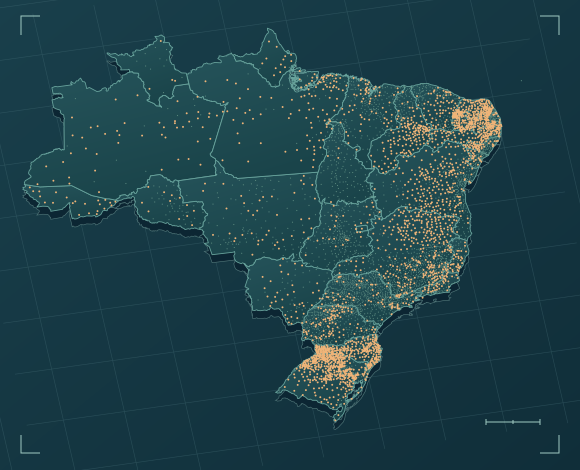
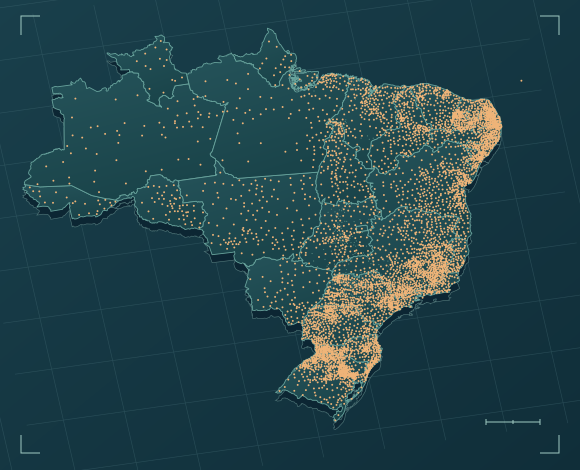
Select a year to see the national total and open the same selection in the atlas.
Source: S2iD / Digital Disaster Atlas · IBGE 2022 boundaries
A single event can generate records in several municipalities. No record does not establish the absence of a disaster.
| Year | municipal records | municipalities with records |
|---|---|---|
| 1991 | 403 | 378 |
| 1992 | 590 | 544 |
| 1993 | 1,324 | 1,300 |
| 1994 | 231 | 222 |
| 1995 | 818 | 766 |
| 1996 | 490 | 469 |
| 1997 | 748 | 705 |
| 1998 | 1,178 | 1,095 |
| 1999 | 741 | 735 |
| 2000 | 595 | 549 |
| 2001 | 1,824 | 1,679 |
| 2002 | 1,816 | 1,587 |
| 2003 | 1,606 | 1,465 |
| 2004 | 2,424 | 1,935 |
| 2005 | 2,314 | 2,095 |
| 2006 | 1,580 | 1,366 |
| 2007 | 1,831 | 1,642 |
| 2008 | 1,921 | 1,616 |
| 2009 | 3,005 | 2,246 |
| 2010 | 2,086 | 1,714 |
| 2011 | 1,740 | 1,298 |
| 2012 | 2,325 | 2,122 |
| 2013 | 2,911 | 2,453 |
| 2014 | 2,505 | 2,179 |
| 2015 | 2,113 | 1,707 |
| 2016 | 2,352 | 1,963 |
| 2017 | 3,089 | 2,267 |
| 2018 | 2,560 | 1,807 |
| 2019 | 2,538 | 1,785 |
| 2020 | 3,880 | 2,482 |
| 2021 | 3,556 | 2,218 |
| 2022 | 5,021 | 2,776 |
| 2023 | 5,115 | 2,803 |
| 2024 | 4,699 | 2,676 |
| 2025 | 4,262 | 2,551 |
The answer is usually scattered. A municipality records damage in S2iD. A monitoring centre keeps the time a warning was issued. A local team knows when a bridge reopened. The report would put those pieces on the same timeline.
Nine chapters would cover the year, major events, the work of SEDEC units, the federation, public policy and links to the Sendai Framework.
One profile per state or federal district would show municipalities reached, local capacity and progress on recovery. State civil defence teams would help explain changes.
A four-year review would examine changes in exposure, losses and response capacity. Open tables and methodological notes would accompany the series.
Choose a phase to see the editorial question, the evidence needed and the teams that would contribute. Editorial assignments are proposed and subject to agreement.
S2iD organises administrative records and cases. The Digital Atlas consolidates the historical series. The annual report would add an account from those who monitored, responded and rebuilt.
Records the disaster, damage and needs. Identifies what was not assessed and revises the record as evidence becomes available.
Review regional coverage and overlaps, document warnings and support, and discuss the profile with participating municipalities.
Units take editorial responsibility for their chapters. DPM and the information team would coordinate drafting, version control and reconciliation. Planning and budget staff would qualify financial figures.
Brazil’s national civil protection council could use the report in its advisory role to monitor the National Plan, discuss territorial gaps and propose priorities. A separate proposed editorial board would commission, review and approve the publication.
The consolidated Atlas extract contains 4,262 municipal records for 2025. Of these, 2,253 are classified as recognised. Recognition is a status in this selection. Adding the two figures would count some of the same rows twice.
Each edition would retain its reference year, cut-off, version, counting rule and corrections. CONPDEC could then ask a state why occurrences appear in the Atlas while warning or assistance records for that territory remain incomplete.
S2iD / Atlas · 9c3f4404acfc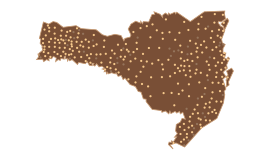 Demonstration profile / SCSC27° S
The Atlas contains 738 municipal records from 252 of the state’s 295 municipalities. Heavy rainfall was the most frequent type in this selection. The state team would add the sequence of warnings, operations and delivered works.
Inspect Santa Catarina in the atlas ↗Pilot issue No. 0, completed in August 2026, demonstrated the method using 1991–2025 data. An internal rehearsal covering 2025 and three state profiles is proposed before the public launch.
Consolidate records for the reference year, freeze a version and document outstanding items and revisions.
Each unit would draft a chapter. State and municipal teams would help verify coverage and context.
Review discrepancies, explain limitations and submit the edition to the proposed editorial board.
The first public edition would cover 2026 and launch on 13 October 2027. The first four-year report is proposed for 2030.
China already publishes an annual account of natural disasters. In its 2025 review, released in January 2026, the Ministry of Emergency Management and the office of the national commission drew on several agencies and described human, economic and territorial impacts.
Read China’s 2025 national review ↗Each delegation could choose a flood episode and bring a public record. The workshop would compare reference periods, territorial units, people affected, warnings and recovery stages. A bilingual glossary and two annotated timelines would be the first outputs.
A proposal for discussion. Exchanges and institutional participation would require agreement.
Review the proposal, establish an editorial board, assign responsibilities by function and agree the calendar with the units and state civil defence teams. The brief sets out the deliverables and decisions for each participant.
Atlas extract for 1991–2025, version 9c3f4404acfc. Municipal records are subject to revision and under-reporting. A place with no record may still have experienced a disaster. Economic losses with different time bases require reconciliation.
Digital Disaster Atlas · IBGE 2022 boundaries. A single physical event spanning several municipalities can generate several records.